


I was in Washington, DC for a few events related to my book earlier this week. While in town, I decided to do a walking tour of some of the physical spaces that Donald Trump has had the biggest impact on. Obviously, I’ve seen these spaces on the news (as, likely, have you), but it was jarring to see these in person.
I’ll note that I lived in DC for several years in the 1990s, and then again during the summer of 2018. The District itself (especially the area surrounding the White House) has changed a lot in recent decades. You used to be able to walk along Pennsylvania Avenue in front of the White House. You could even drive on it! It’s long been a fortress, but now it’s hard to even see it from anything less than half a mile away. Those changes, of course, have occurred over decades, and Trump is only responsible for some of that.
But let’s talk about some of the newer items. Jai Griem and I took the photos below.
The Reflecting Pool
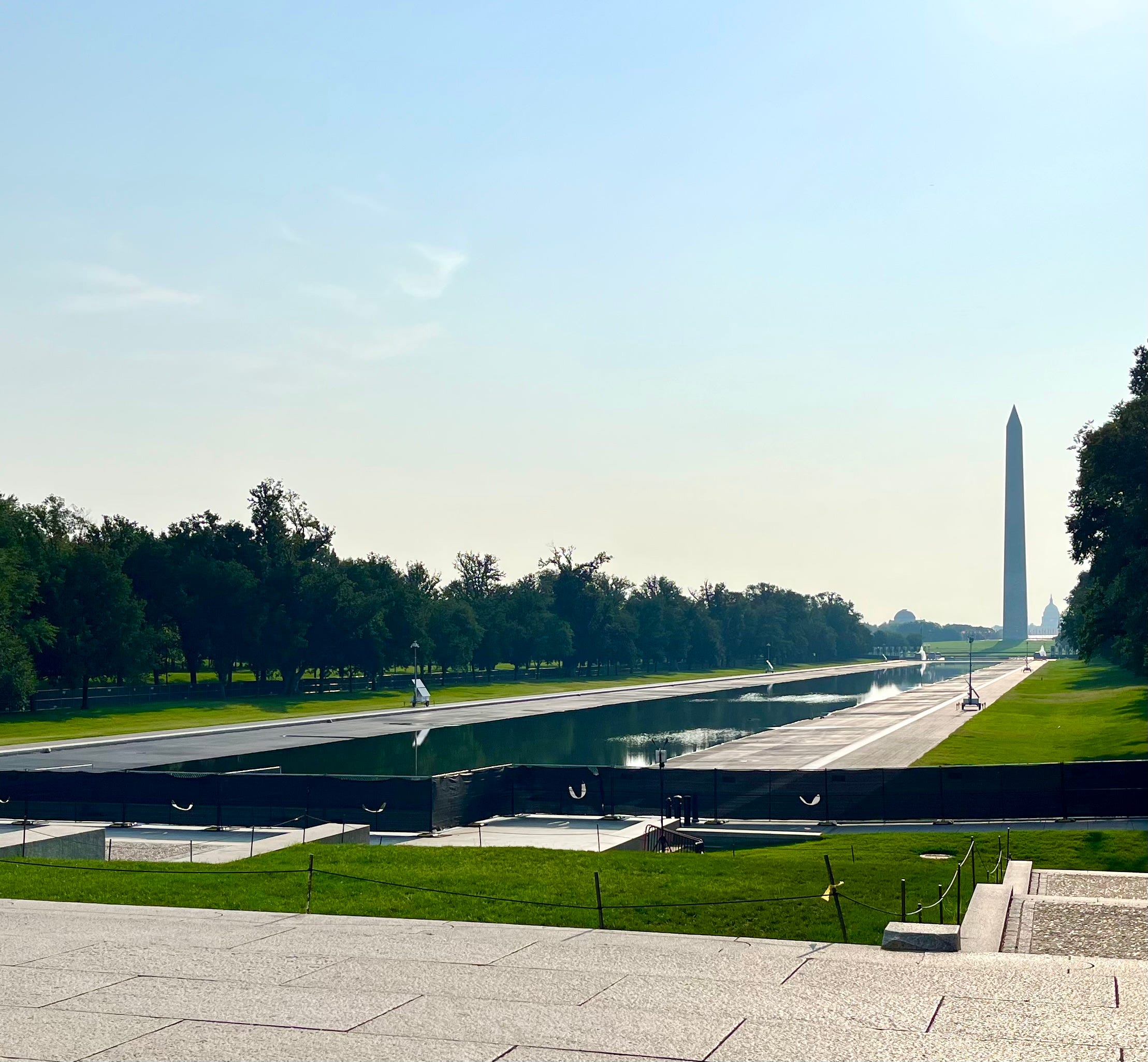
This was pretty bleak to look at. It also wasn’t that easy to look at, given that the pool is completely surrounded by black fencing. You can see over the fencing from the steps of the Lincoln Memorial, as we did above. The pool contains some water from rainfall and from some newer attempts to flush out the pipes.
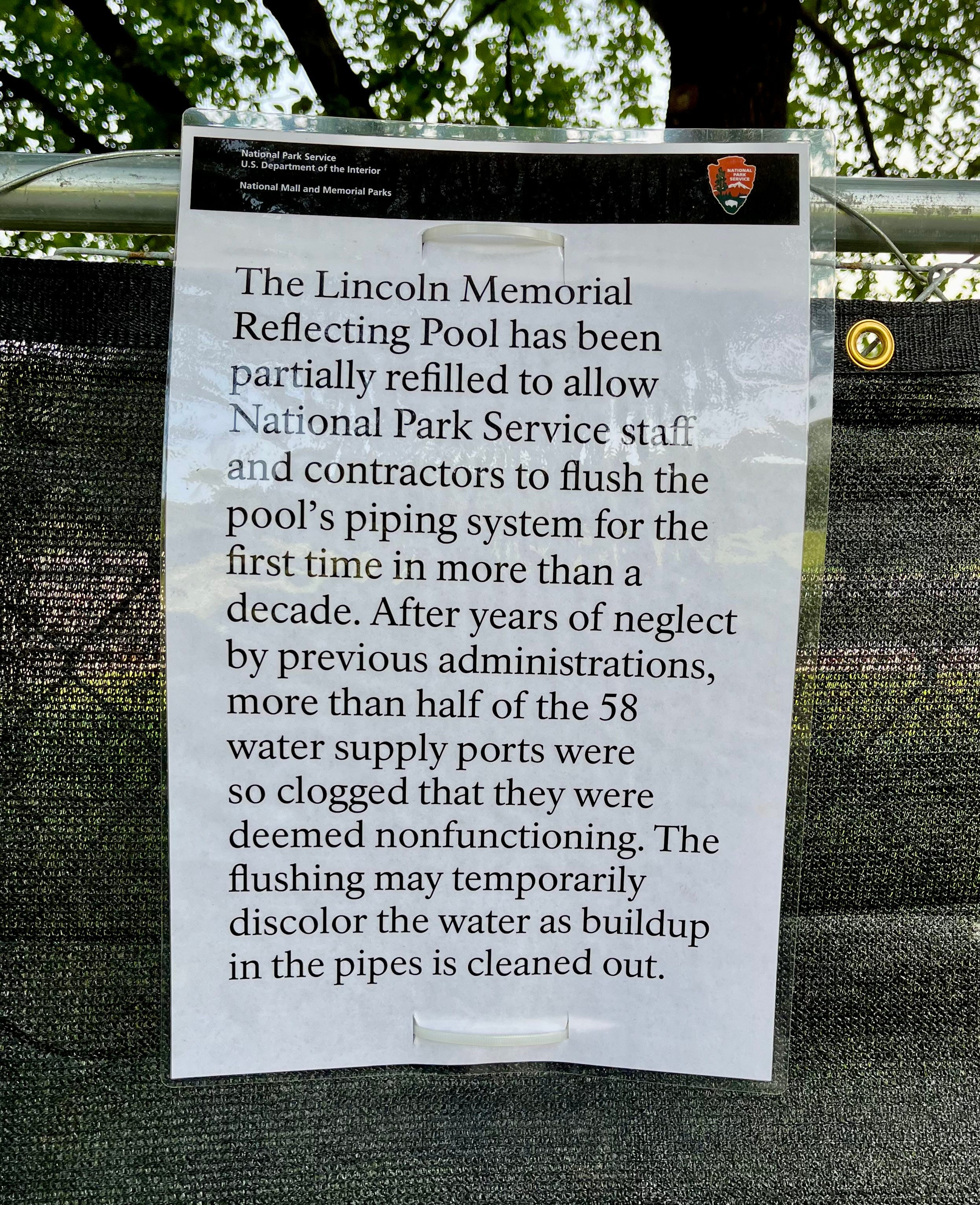
The fencing has this sign below attached to it. As is typical of this administration, this official government notice from a federal agency (the National Park Service) is not at all neutral in tone, but rather tries to score points against previous presidencies (including, one assumes, the first Trump administration). The overt politicization of agencies generally not considered political, or at least overtly partisan, is well on display here, even if the pool itself isn’t.
When I lived in DC in 2018 I used to regularly go for early morning runs around the Reflecting Pool. It has long been a pleasant and quiet place, and one can often see tourists and school groups walking it as they pause between the nearby memorials (Lincoln, the Korean War, the Vietnam War, World War II). Staring eastward at it, with the Washington Monument reflected on its surface, was the view Martin Luther King, Jr. had while delivering his 1963 address.
There’s nothing grand about it now. It looks like an oversized swimming pool that someone lost interest in maintaining, and they’re just trying to keep the kids away from it so no one falls in or gets giardia. It’s hardly beyond repair, but it’s quite far from inspiring at the moment.
