

Ten years after
Trump clinched the GOP nomination ten years ago today; here's what we've learned since then

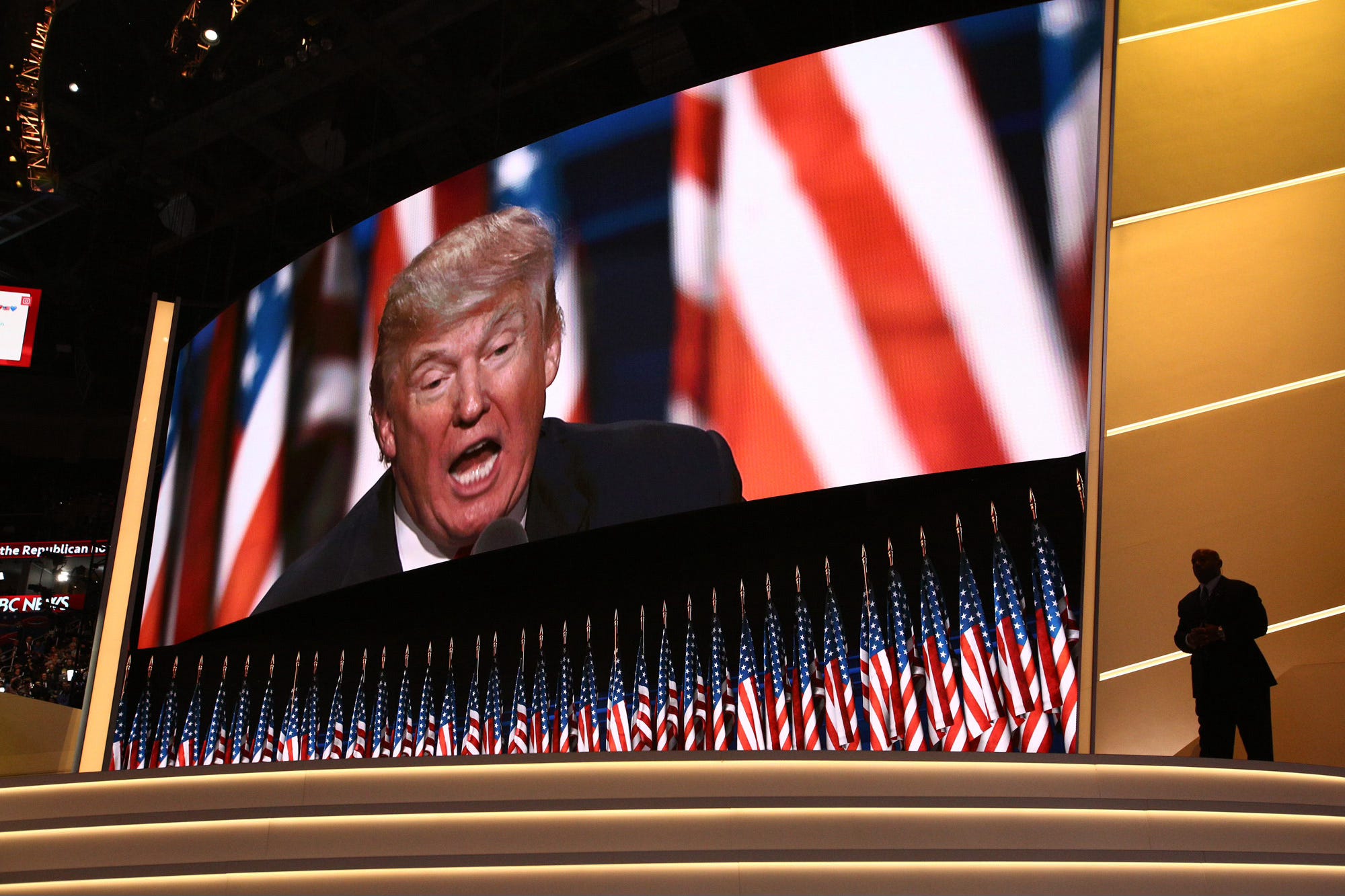
On May 26, 2016, 29 uncommitted delegates to the Republican National Convention announced that they were backing Donald Trump. This put him above the threshold needed for him to win the Republican nomination — an event that seemed incomprehensible even as it was happening. This is probably one of the most consequential dates in modern American political history, though it rarely gets discussed this way. What have we learned since then?
I found it interesting to look back at what I wrote at the time. In a Vox/Mischiefs of Faction piece entitled “We are Witnessing the most Massive Failure of a Political Party in Generations,” I argued that Trump was exactly the sort of candidate parties exist to keep off the ballot — one who was ignorant of or hostile to many of the party’s longstanding beliefs, and one who was unlikely to win in November. Both parties have long histories of snuffing out rich and famous people’s presidential fantasies, and the fact that Republican elites could not keep him off the ballot showed a failure of coordination.
The logic of that was pretty straightforward — if party insiders could have coordinated on one preferred candidate (Jeb Bush, Marco Rubio, Scott Walker, etc.) early on and provided that candidate with lots of endorsements and money, they could have prevented Trump’s rise. As it was, party insiders never really agreed on any candidate prior to the convention. Very few endorsed Trump, and the rest of the endorsements were scattered across multiple candidates. When there’s no clear signal from party leaders, that creates an opportunity for a rich and famous person to jump into the race and win primary voters over.
There were a few attempts to consolidate support late in the game: Ted Cruz teamed up with Carly Fiorina to unite two small unpopular campaigns into one slightly less small unpopular campaign, Mitt Romney encouraged Republicans in each primary or caucus to rally behind whomever was the non-Trump poll-leader in each state, there was a brief attempt by “Never Trumpers” at the convention to derail his nomination, etc. But all this proved to be too little and too late. Coordination really has to be done well ahead of time.
With the benefit of ten years of hindsight and after writing a new book on the GOP, I’ve come to view these events somewhat differently. I think a better coordinated set of party insiders could have derailed Trump, maybe. But Trump was less an idiosyncratic famous guy who jumped in and blew up the system, and more the avatar of a populist movement that had been growing within the party for decades. It’s one thing to screen out a candidate; it’s quite another to screen out a faction that’s already inside the party.
As I see it, there were several key moments in the rise of this faction. People disagree about when the modern version started, but I tend to point to Pat Buchanan’s 1992 presidential campaign, challenging a sitting Republican president from the right and articulating a specific conservative populist viewpoint: elites are corrupt, working class whites are the truly virtuous people, international alliances are bad, as are gay people, immigrants, professors, Hollywood…. The movement was small, but it had enough energy in it to win Buchanan 367 convention delegates, and the rest of the party knew it had to take these folks somewhat seriously.
Trump was less an idiosyncratic famous guy who jumped in and blew up the system, and more the avatar of a populist movement that had been growing within the party for decades
That movement grew over the next few decades, facilitated by Rush Limbaugh and conservative talk radio, Newt Gingrich in his speakership, the nascent Fox News of the 1990s, and more. The Tea Party, starting in late 2008, was another outgrowth of it, ostensibly organized to oppose bank bailouts and health care reform, but ultimately being heavily motivated by Barack Obama’s skin color and their own white status anxiety.
Importantly, a populist movement is inherently distrustful of anything that smacks of “establishment.” But the party’s existing establishment did a number of things to discredit itself, as well. They strongly supported the war with Iraq, which initially was a rallying point for Republicans and helped boost George W. Bush to the only Republican popular vote majority of this century. Yet as that war dragged on, casualties mounted, and the purpose of the war seemed either elusive or outright fraudulent, many conservative populists came to see it as a “forever war” foisted on them by elites. They came to hate it almost as much as liberals did.
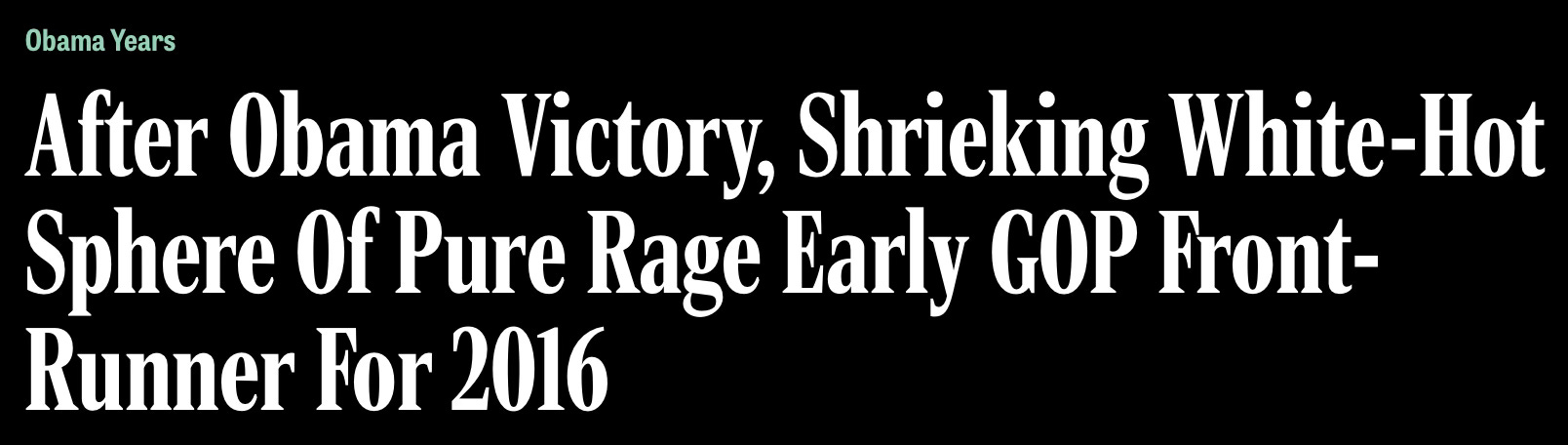
Also important were the presidential candidacies of John McCain in 2008 and Mitt Romney in 2012. Conservative populists never trusted them, but they were told repeatedly by leaders that they had to support those candidates because they were the only ones who could keep Obama out of the White House. When both those missions failed, the populists were in no mood to listen to party leaders ever again. The Onion summed up the mood well in a piece from November 7, 2012:
Trump’s nomination ten years ago looks somewhat different in that light. He was the chosen leader of an energetic and angry faction within the party, which wasn’t quite the majority faction but could become one with the help of his fame and money. Had Republican leaders managed to coordinate effectively against Trump, no less if they actually derailed him at the convention after he’d won the most primary votes, that populist movement wouldn’t have died out. If anything, it would have become stronger.
Viewing it this way also helps us see why coordination against Trump was so hard. The whole idea of the influence of party elites in presidential nomination contests is that those elites make endorsements and those endorsements, when unified and clear, help instruct primary voters on how to vote. If the party’s voters not only don’t care about what party leaders say but are actually hostile to their opinions, that makes it hard for them to steer the nomination even if they coordinate early and well. Which they did not.
I think often about a pair of Des Moines Register polls of Iowa Republicans from 2015.
From May 2015:
https://www.desmoinesregister.com/story/news/elections/presidential/caucus/2015/05/30/iowa-poll-donald-trump-never-support/28231261/
The Des Moines Register/Bloomberg Politics Iowa Poll asked GOP likely caucusgoers to consider all the contenders they didn't name as their first or second choice for president right now, and to say if they could "ever" support the person or "never" support the person.
Fifty-eight percent say they could never support Trump, the Manhattan businessman and TV personality.
Then Trump spent the summer bashing immigrants, the "Mexican" judge, etc. By August 2015, Trump led Republicans with 23 percent support, followed by Ben Carson (18 percent) and everyone else in single digits.
https://www.desmoinesregister.com/story/news/politics/iowa-poll/2015/08/29/iowa-poll-trump-leads-carson-second/71285456/
The racism turned things around for Trump.
I have felt that a part of this story is that Bush seriously undercut the GOP's bona fides with Republican voters on its calling card issues. The party "good for the economy" gave us the Great Recession. The party "good for national security" gave us the Iraq debacle. The party "good for fiscal responsibility" gave us a return to deficit spending. The party "good for religious conservatism" was more talk than action. There was little excitement about supporting a GOP leadership (including McCain and Romney) that simply fails to deliver. In 2016, Trump exploited GOP voters' disenchantment and disappointment, mocking his opponents and their empty, dishonest promises. His sales pitch was that he was different, not lying like the party had been lying, and could deliver what GOP voters have most wanted.