

Democrats throw some uncertainty into the 2028 primaries
In: Jim Clyburn tea leaves and guesswork. Out: Cold handshakes and ranch dressing.

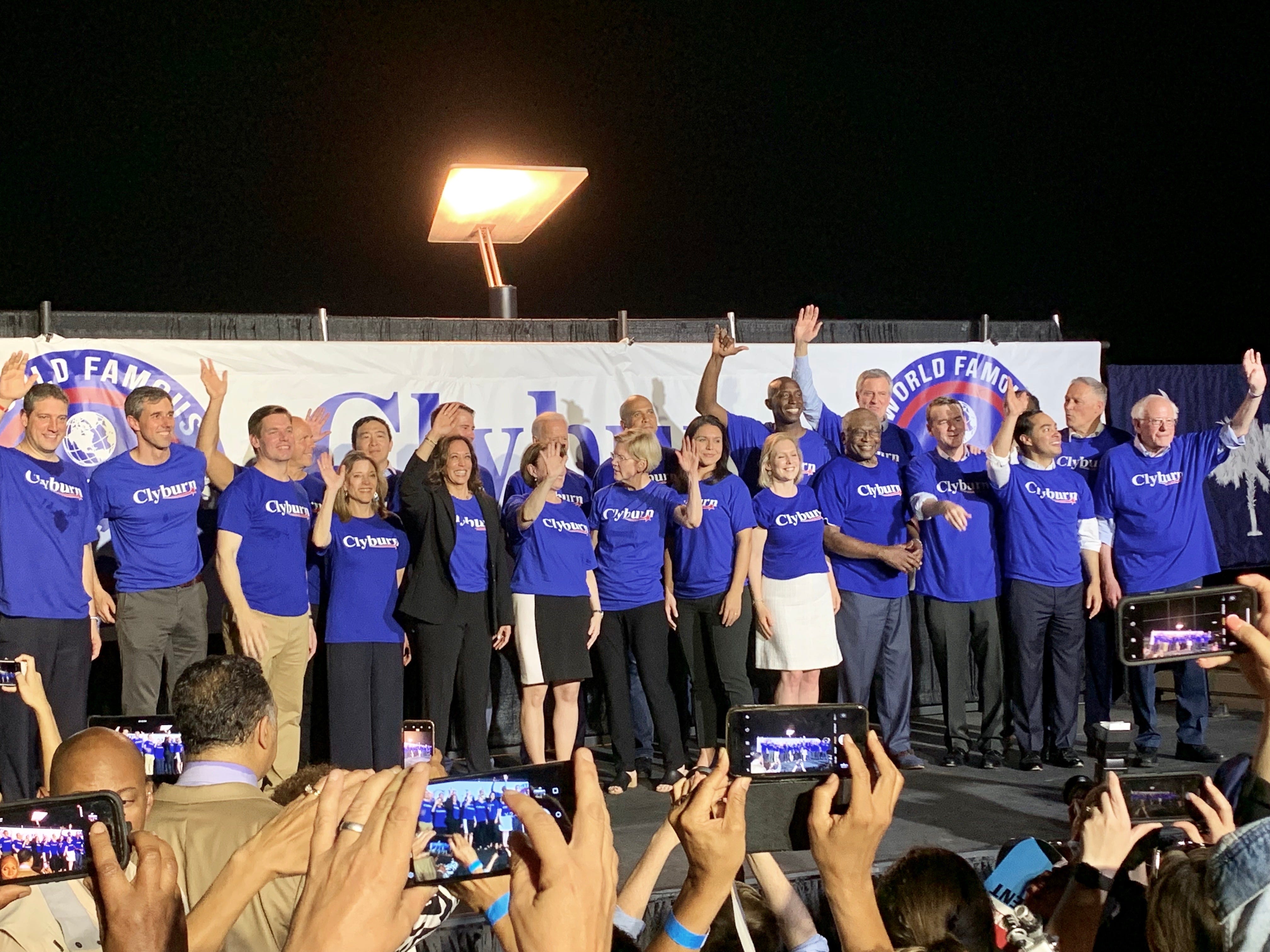
The first Democratic presidential primary of 2028 is a mere 541 days away! You may despise me for reporting that, but thanks to a recent meeting of the Democratic National Committee’s Rules & Bylaws Committee, we have a calendar for the next presidential nomination contest. Here’s what you need to know about it.
For decades now, the Democratic presidential nomination cycle has begun with just four states — Iowa, New Hampshire, Nevada, and South Carolina — being granted permission to have early primaries and caucuses, with the rest of the states holding theirs anytime from early March to early June. (Iowa and New Hampshire have held this early role even longer than the other states have.) That’s why so many candidates have set up tents in just those four states often months or even years in advance of the election.
This next cycle is going to be different on the Democratic side. As Josh Putnam reports (and really, you should be reading him if you want to understand decisionmaking within the DNC), the 2028 calendar will involve six early state contests:
South Carolina on January 22nd
Nevada on February 1st
New Hampshire on February 8th
New Mexico on February 15th
Michigan on February 22nd
Virginia on February 29th
Iowa Democratic Party Chair Rita Hart describes this calendar as “a slap in the face to Midwesterners.” Well, it’s really just a slap in the face to Iowa Democrats, who had a famously messed-up 2020 caucus. Republicans will still do their first event there, but Democrats have chosen to break from a half-century tradition and try some different states in the mix.
The first three states — South Carolina, Nevada, and New Hampshire — have long been early contests for Democrats. But New Mexico, Michigan, and Virginia are now in the mix. (South Carolina went first in 2024, but given that President Biden faced no serious challenge for the nomination, it wasn’t much of an event.)
On the whole, this is a pretty good mix of states, consisting of states from the Deep South, the Mid-Atlantic, New England, the Mountain West, the Southwest, and the Midwest. South Carolina’s, Virginia’s, and Michigan’s primary electorates consist of large numbers of Black Democrats, Nevada and New Mexico have large number of Latinos, New Hampshire is quite rural while Michigan, Nevada, and Virginia contain large dense urban areas, etc.
What does this mean for the actual nomination? Well, as Perry Bacon Jr points out, probably not a ton:
In the last six competitive Democratic presidential primaries (1992, 2000, 2004, 2008,2016, 2020), the winner of the Iowa caucuses eventually won the nomination four times (Al Gore, John Kerry, Barack Obama, Hillary Clinton). That’s a bit more than half the time—hardly a guarantee of victory. The New Hampshire victor is just two for six (Gore in 2000, Kerry in 2004). Bill Clinton, and then Joe Biden almost three decades later, won the nomination after losing both states.
Joe Biden’s 2020 nomination after coming in fourth in Iowa and fifth in New Hampshire speaks pretty loudly here.
What does this mean for candidates and campaigns? Probably a good deal more.
