

A March 11th Moment?
Some thoughts on Jimmy Kimmel and the ongoing democratic erosion

In the early days of the Covid-19 lockdowns, I was part of a tight-knit group of academics across the country who started talking every day over a text thread. We were largely checking in on each other, offering teaching tips, sharing news stories, and otherwise just trying to have some sort of human contact in a time when that was quickly becoming scarce. (We’ve talked pretty much every day since then.)
As the disease caseloads started to mount, we had conversations about how this thing was really serious, and that several of us — maybe all of us — would eventually contract this deadly illness. Things unfolded rather differently from what we speculated, in some ways better and in some ways worse. But there was that moment when we realized that this was serious and that all of us would be personally and collectively changed by it.
March 11, 2020 seemed like a pretty critical moment in that period. That was the day that Tom Hanks and Rita Wilson announced that they had contracted Covid and were in isolation, and it was the day that the NBA shut down its games. For people who were just kind of blowing off the virus, that was the day they knew they had to take it seriously and that their lives were about to change.
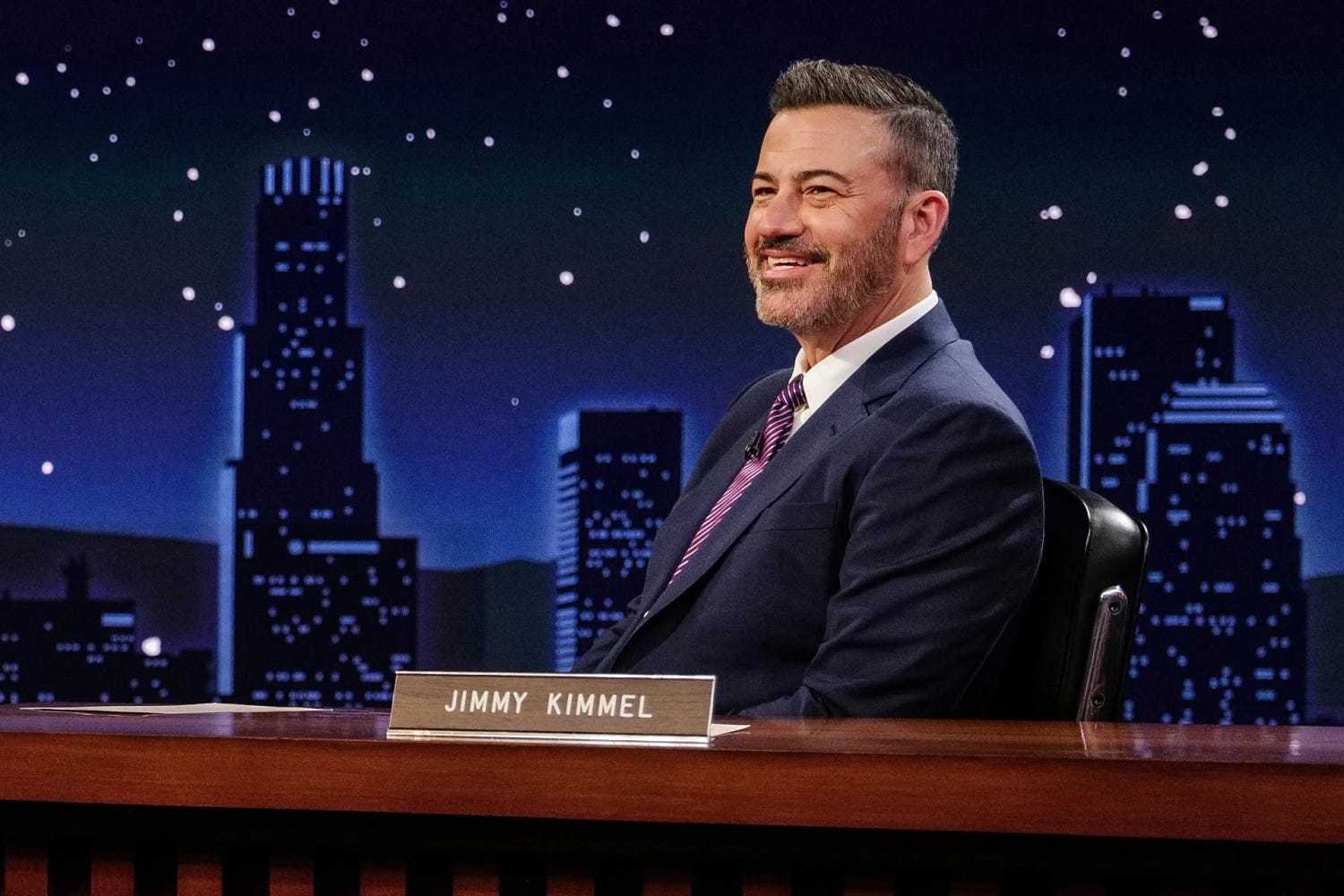
The indefinite suspension of Jimmy Kimmel feels like a similar moment in some ways. A lot of people have had fears and concerns about the health of democracy and freedom of speech under Trump. But for others, it was possible to dismiss or minimize those fears. Sure, he cracks down on some migrants, he sends soldiers into cities, he files absurd lawsuits to intimidate newspapers, but it was possible for some to see those as bluster or PR work, or just affecting a small number of people.
This is different. This is the federal government bullying a major, wealthy corporation into firing a critic of the president. And Trump is not only crowing about this achievement but also pressuring NBC to fire Seth Meyers and Jimmy Fallon. And this all comes at a time when the Trump administration is openly using the killing of Charlie Kirk as a pretext for attacking all sorts of left-leaning organizations. It’s a profound violation of the First Amendment, both in text and in spirit, and it’s a substantial shift away from democratic traditions and toward authoritarian restrictions.
In the 2006 film V for Vendetta (sorry, I haven’t read the graphic novel), Gordon Deitrich (played by Stephen Fry) is the host of a TV comedy show in a United Kingdom that is growing increasingly authoritarian. In response to new crackdowns by the government, Deitrich decides to air a show segment that overtly mocks and ridicules the strongman chancellor. When warned that this might be dangerous, he dismisses the concerns, assuming he’ll just have to apologize while the show’s ratings skyrocket. Instead, paramilitary police invade his house and detain and murder him.
The Trump administration isn’t following this film letter for letter but it’s definitely moving in similar directions. (It’s very much worth watching today.) And importantly in that film, there are many people (including the main character Evey, played by Natalie Portman) who recognize the problems but are largely content to just keep their heads down and work and watch TV with their families and go on with their lives, until there’s a moment that goes too far for them and brings the dangers front and center.
I don’t know for how many people this will be that moment. But Jimmy Kimmel regularly had between 1 and 2 million viewers; Stephen Colbert had between 2 and 3 million. A lot of those viewers are not especially politically-minded; just average Americans who like a giggle or an interview before bed. Seeing these very prominent people being taken off the air explicitly for criticizing the president is one of those moments that breaks through.
This requires a bigger solution than donating to someone running for a congressional seat, or canceling subscriptions. Is the only solution to move to another country? Are all of us on this chat in trouble as well? What's to stop him from finding all of us, here?
"In the 2006 film V for Vendetta (sorry, I haven’t read the graphic novel), Gordon Deitrich (played by Stephen Fry) is the host of a TV comedy show in a United Kingdom that is growing increasingly authoritarian. In response to new crackdowns by the government, Deitrich decides to air a show segment that overtly mocks and ridicules the strongman chancellor. When warned that this might be dangerous, he dismisses the concerns, assuming he’ll just have to apologize while the show’s ratings skyrocket. Instead, paramilitary police invade his house and detain and murder him."
Great V for Vendetta comparison, that vibe of Deitrich thinking he can get away with something and then coming face to face with the secret police is very resonant. Slight nerdy quibble though: Deitrich wasn't taken down as part of crackdowns on political comedy by an increasingly authoritarian regime like Kimmel, he was an apolitical comedy host under an already very authoritarian regime, who was taken down when he thought he was big enough to make fun of the regime.